The 5 Gates: Why You're Loading Movements Your Athlete Hasn't Earned Yet
An athlete shows up, looks athletic, moves okay in the warm-up, so you put them under a bar. Three weeks later something in the low back or the front of the hip starts barking. Now you're managing a problem instead of building an athlete.
Here's what usually happened: you loaded a pattern the athlete couldn't actually own yet. Not because you're careless — because the screen you used (if you used one) gave you a pass/fail on a single position and didn't tell you the one thing you needed to know: is this athlete ready for the specific demand I'm about to add?
That's the gap. And it's not a mobility problem, a strength problem, or a speed problem. It's a sequencing problem — you added a quality before the one underneath it was in place.
I've spent 25 years building a system around closing that gap. The piece that does it is five questions.

A screen isn't a number. It's a sequence of gates.
Most screening treats movement like a score: run the tests, add up the points, flag anything below a threshold. Useful, but it answers the wrong question. It tells you how an athlete moved today. It doesn't tell you what they've earned the right to do next.
The Patel Training System runs every athlete — and every movement — through the same five questions, in order. Each one is a gate. You don't get to the next level until you've passed the one before it:
1. Can you get into position?(Isometric — mobility, stability, motor control.) Can the athlete simply hold the shape? Can they get into a clean squat, a hinge, an overhead position and stay there? If they can't own the position statically, nothing built on top of it is safe.
2. Can you get in and out of position?(Dynamic — bodyweight quality through full range.) Holding a shape is one thing. Moving cleanly through the whole range under their own bodyweight is another. This is where you find the athlete who can reach a bottom position but can't control the path getting there.
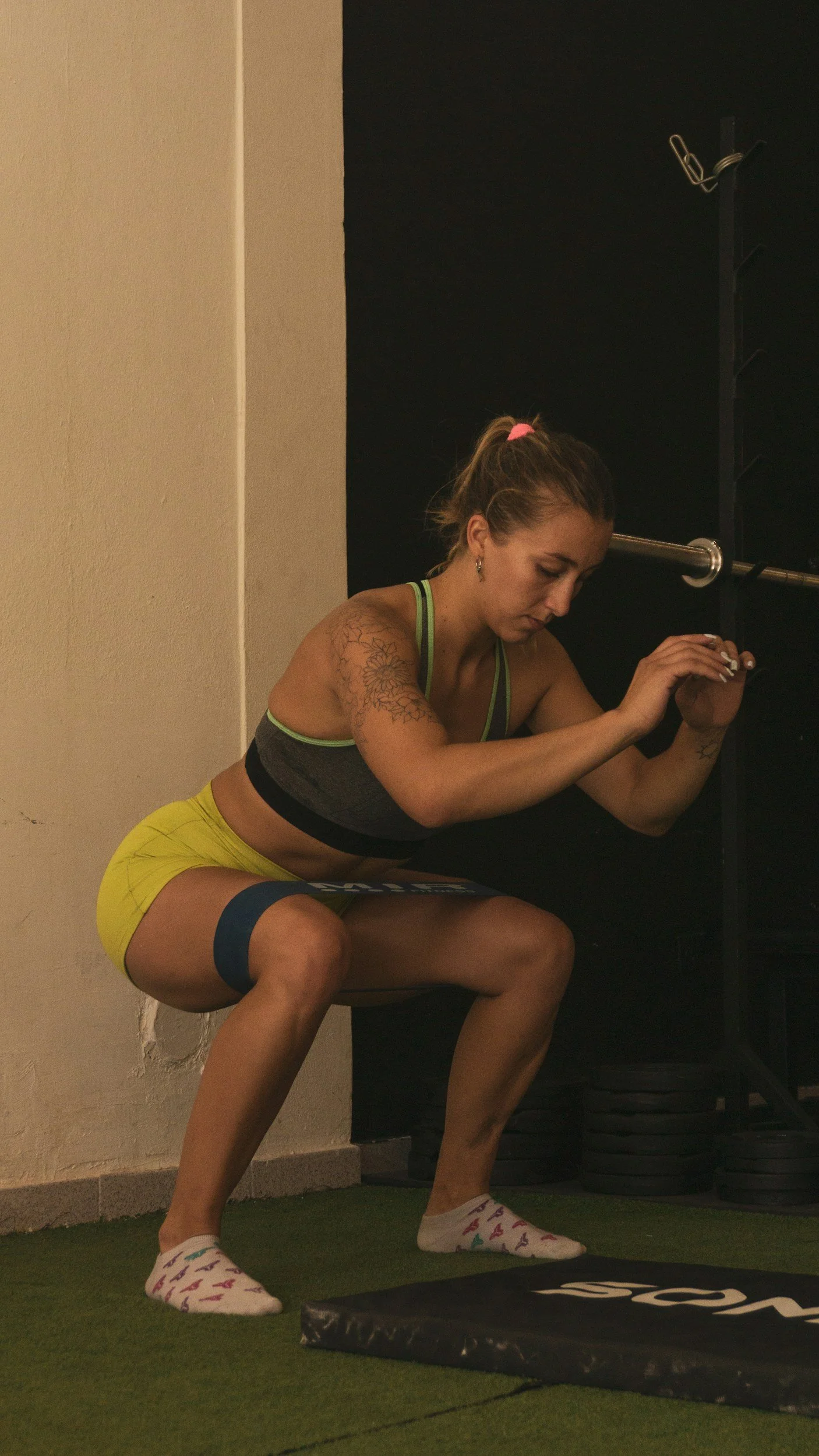
3. Can you do it under load?(Strength — pattern integrity against resistance.) Now — and only now — do you add external resistance. The question is whether the pattern holds its shape when you load it. If the squat falls apart at 60%, the answer isn't "add weight." It's "the athlete hasn't passed this gate."
4. Can you do it with speed?(Ballistic — power and rate of force development.) Plyometrics, jumps, throws, ballistic work. Speed multiplies whatever's underneath it — including the flaws. You earn the right to express a pattern fast by first owning it slow and loaded.
5. Can you do it repeatedly?(RSA — under accumulated fatigue.) The final gate. Can the athlete repeat the quality when they're tired — which is exactly when sport demands it? A pattern that's clean fresh and ugly fatigued isn't trained yet.
The mantra for the whole sequence: Earn it. Own it. Load it. Make it fast.
The most important thing about the five questions: it's a gate, not a timeline
This is where most programs go wrong, so it's worth being blunt about it.
The five questions are not a four-week calendar. An athlete doesn't get to load a pattern because the mesocycle says it's week three. They get to load it when they've demonstrated they can get into and out of the position cleanly. The gate opens when it's earned — not when the schedule says so.
That single idea is how you keep athletes healthy. You never add load, speed, or volume to a pattern the athlete hasn't earned. When you respect the gates, the injuries that come from rushing — the tweaked back under a bar that was too heavy too soon, the strained hamstring sprinting on a pattern that wasn't owned — mostly stop happening. Not because you got lucky. Because you stopped skipping steps.
It's the practical, screen-level version of the whole injury-first philosophy: the best ability is availability, and availability is built by not loading what hasn't been earned.
Why a single screen at the start of the season isn't enough
The other trap is treating the screen as a one-time event. You assess in August, write the program, and never re-check.
But the gates move. An athlete who passed "under load" in pre-season can lose it after a few weeks of heavy competition, travel, and accumulated fatigue. A coming-back-from-injury athlete might pass gate 1 and 2 cleanly but fail gate 5 — fine fresh, falls apart tired. If you're not re-running the questions, you're programming off a snapshot that's already stale.
The five questions aren't a test you pass once. They're a lens you keep using.
Why I built the Movement Screen Tool
I've been running athletes through these five gates for 25 years. The framework is simple to state and harder to apply under real conditions: you have to identify which gate each athlete is actually stuck at, then prescribe the right work to move them through it — mobility and motor control for a gate-1 athlete, loaded pattern work for a gate-3 athlete, fatigue-resistant repeats for a gate-5 athlete. Get that matchup wrong and you either under-challenge an athlete who's ready or load one who isn't.
Doing that by eye, across a roster, every few weeks, is a lot to hold in your head. So I built a tool that does it.
You run the athlete through the five-question paradigm. The tool finds the gate they're stuck at, and gives you the prepare / load / explode work to move them forward from exactly that point — not a generic corrective list, but the work that matches the gate they actually failed.
It's not a scoring sheet. It's the assessment layer of the system, turned into something you can run in a few minutes and act on the same day.
The practical takeaway
Three questions to run before you load or speed up any movement:
1. Which gate is this athlete actually at? Not which one your program assumes — which one have they demonstrated? If you can't point to the gate they've earned, you don't know what's safe to add.
2. Am I adding a quality the layer underneath can support? Load sits on top of dynamic control. Speed sits on top of load. Repeats sit on top of all of it. Skip a layer and you're building on something that isn't there.
3. Have I re-checked, or am I working off a stale snapshot? Gates move. The athlete in week eight isn't the athlete you screened in week one.
Earn it. Own it. Load it. Make it fast. In that order — every time.
The Movement Screen Tool is one of the tools inside the Patel Training System. Members get the full suite — the assessment paradigm, energy-system prescription, the RI/RPE planner, the AI Program Builder, and more — all built from the same system.
