The Athlete Trains Under a Dozen Coaches. They All Speak Different Languages.
Every coach names exercises their own way. That's a private quirk — until you follow one athlete across a whole career and watch them relearn the vocabulary at every stop. Medicine and law fixed this problem a century ago. Our field never tried.*
Follow one athlete through a career and count the coaches.
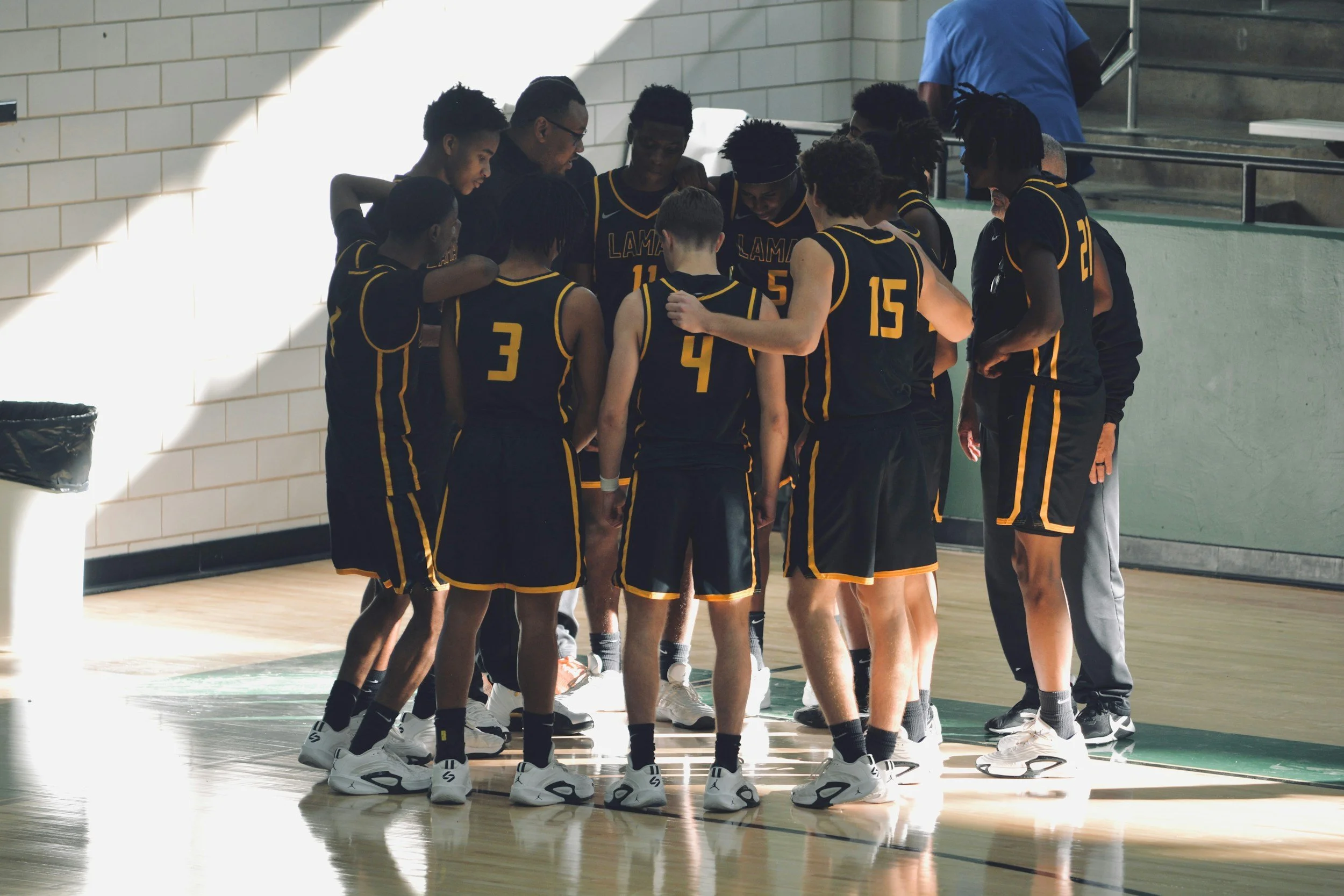
Youth club. Middle school. High school — where the staff turns over twice before they graduate. A college program with a head coach, two assistants, and a rotating cast of interns. Maybe a private facility in the summers. Maybe a pro or semi-pro setup after. By the time that athlete is done, they've trained under fifteen, twenty, thirty different coaches — and here's the part nobody accounts for: every single one of them named the exercises differently.
Not slightly differently. Fundamentally differently. One coach's "hip hinge" is the next one's "RDL" is the next one's "good morning without the bar on your back." One coach's "single-leg squat" is another's "pistol" is another's "Bulgarian, sort of." The movements barely changed across all those years. The words changed constantly. And every time the words changed, the athlete paid a tax — a stretch of days or weeks where they were relearning names for things they already knew how to do, hesitating on a cue they'd have executed instantly under the old vocabulary, or quietly performing a movement a little wrong because "RDL" meant something different to this coach than the last.
We don't see that tax, because each of us only ever occupies one stop on that athlete's journey. From where I stand, my naming is perfectly clear — I know what I mean. The cost is invisible to the coach and fully absorbed by the athlete. And it's completely unnecessary.
This is an industry problem, not a personal-preference problem
It's tempting to file exercise naming under "everyone's got their own style," like coaching cues or warm-up music. But naming isn't a style. It's the interface between what a coach intends and what an athlete does — and when the interface changes every time the athlete changes buildings, the whole profession is quietly making itself harder to learn from.
Think about what that costs at the population level, not the individual one. A high-school athlete arrives at college having "done cleans for three years" — except the college staff has no idea what that athlete was actually taught, because "clean" covered four different movements across their three previous coaches. So the college staff re-teaches from scratch, burning weeks, because they can't trust the vocabulary the athlete arrived with. Multiply that by every transfer, every recruiting class, every athlete who trains at a school and a private gym simultaneously and runs two vocabularies at once for the same lifts. The friction is enormous, and it's entirely self-inflicted. We built a field where expertise doesn't transfer cleanly between practitioners, and the athlete is the one who keeps re-paying the onboarding cost.
That's not a small inefficiency. It's a structural one. And the fix isn't for everyone to adopt my names — it's for the field to agree that names should describe movement, so that any competent coach's program is legible to any other competent coach, and to the athlete moving between them.

Every serious profession solved this — because the stakes demanded it
Here's what should embarrass our field a little: professions with real consequences standardized their language a long time ago, precisely because ambiguity was dangerous.
A physician in Boston writes "distal radius fracture" in a chart and a physician in Tokyo, who has never met her and doesn't share her language, knows exactly which bone, which end, and what happened. No demonstration. No translation. A pharmacist fills a prescription written by a doctor they'll never speak to, correctly, because the nomenclature is shared and precise. A lawyer reads "consideration" or "tort" or "habeas corpus" and each term unpacks into one specific meaning for every practitioner in the jurisdiction. These fields didn't standardize their vocabulary because they enjoy bureaucracy. They did it because a misread diagnosis or a misunderstood contract clause can end a life or a livelihood, and a shared language is the only thing that removes the ambiguity.
Strength and conditioning has the same underlying requirement — precise communication about the human body, with genuine injury consequences when it goes wrong — and almost none of the same discipline. We name the same movement five different ways across five coaches and shrug it off as personality.
Imagine a radiologist deciding to invent a personal name for the radius because they liked it better, and expecting the next doctor to just figure it out. That's roughly the standard our field operates at, and the athlete is the patient who absorbs the confusion.
What a shared language actually requires
The solution isn't a naming committee or a governing body handing down decrees. It's a principle any coach can adopt unilaterally, today, that happens to produce a shared language as a byproduct: name the mechanics, not the origin.
If a name describes what the body is actually doing — the setup, the equipment, the surface, the position, the grip, the direction — then it means the same thing to every coach who reads it, whether or not they've ever met the coach who wrote it. The name becomes self-decoding. It doesn't require insider knowledge, a demonstration, or membership in a particular coaching lineage. It just describes the movement, and anyone fluent in movement can read it. That's the entire mechanism behind a shared professional language: the words point at reality instead of at each other.

Adopt that principle and something quietly powerful happens across a career. The athlete who learns movements under a mechanical naming system carries that vocabulary with them — because it describes their body, not one coach's habit. When they change schools, the words still mean what they meant. When they add a private coach, the two vocabularies don't collide, because both describe the same mechanics. The relearning tax drops toward zero. The athlete stops re-onboarding every time the building changes, and starts actually building on what they already own.
That is the case for consistency, and it has nothing to do with whose naming system wins. A standard exists to serve the person being served — the patient, the client, the athlete — not to flatter the professional using it. Medicine figured that out. Law figured that out.
Our field, which touches millions of young athletes across their most formative years, still treats the language of movement as a matter of personal taste.
It shouldn't be.
The athlete deserves a vocabulary that travels with them — and building one is as simple as deciding that a name's job is to describe what the body does.
I built the free Exercise Name Generator to make that easy: pick each field in order — setup, equipment, surface, position, grip, direction — and get a precise, self-decoding name that any coach or athlete can read without a demo. It's a small step toward a language the whole field could share. Try the Exercise Name Generator
Follow @bpatel515for more on building a system athletes can carry with them.
