The M.A.P.P.S. System, Part 4: How Progression and Specificity Complete the System (And Why Most Injuries Are Actually Programming Errors)
I'm going to say something that might be uncomfortable.
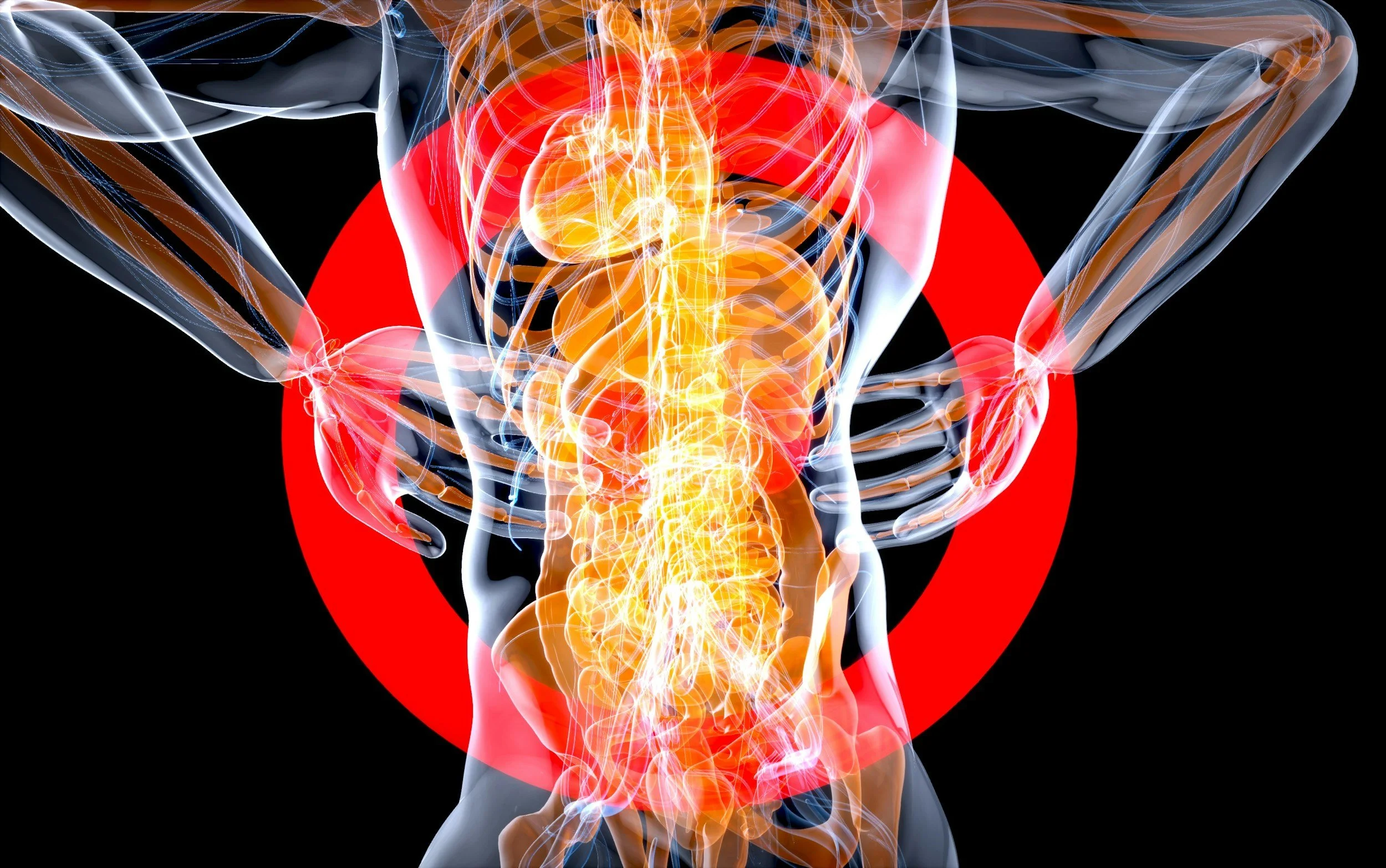
Most training injuries are the result of programming errors
Not always. Sometimes an athlete lands wrong. Sometimes there's contact. Sometimes life happens and it has nothing to do with the weight room.
But many overuse injuries, the chronic knee pain, the persistent low back issues, the shoulder that's been "a little off" for two years — those aren't bad luck. They're the result of loading positions the athlete wasn't ready to load, repeating patterns without adequate variation, and progressing by calendar instead of by competency.
Progression and specificity are the parts of M.A.P.P.S. that fix this.
Progression is a Gate, not a Timeline
Every athlete I work with starts at the same place: question one of the movement paradigm.
Can you get into position?
From there, the pathway is:
ISO → Dynamic → Loaded → Ballistic → Speed/RSA
They move forward when they earn it. Not when week two arrives. Not when the program says it's time. When they show me they own the position.
That distinction matters more than almost anything else in coaching.
I've had athletes spend three weeks on the isometric and dynamic phases of a single-leg squat before we ever touched a goblet hold. Three weeks of holding positions, moving through ranges, building the hip stability and motor control that the loaded version demands. Three weeks that looked slow on paper and produced an athlete who could then progress faster and more safely than if we'd rushed it.
I've also had athletes earn loaded single-leg work in three sessions. Because they already had the positions. The paradigm isn't a punishment — it's a diagnostic. It tells you where to start. And sometimes the athlete is already further along than you assumed.
The Regression Rule
There's one rule in M.A.P.P.S. that I hold more firmly than any other:
If the pattern breaks, you regress immediately.
Not at the end of the session. Not next week. That rep.
If a hip drops during a loaded split squat, we pull the load and go back to bodyweight. If a lower back rounds on a straight leg deadlift, we reduce range, reduce load, or change stance. The pattern is the non-negotiable. Everything else — the load, the volume, the variation — is adjustable in service of protecting the pattern.
This is harder to hold to than it sounds. Athletes want to train heavy. They push back. They tell you they're fine. The coach's job is to see what the athlete can't see — that they're not fine, that they're compensating, and that compensation under load over time can manifest as movement dysfunction and pattern overload that may result in chronic pain.
You're not regressing them because they failed. You're regressing them because you're playing a long game.
Specificity: the "why" behind every exercise
The final layer of M.A.P.P.S. is specificity. And it's the one that most separates intentional programming from random selection.
Specificity answers one question for every exercise in a program: why is this here?
The answer has to connect to one of three things:
A physical quality. Strength, power, speed, mobility, stability, hypertrophy, conditioning, motor control. If an exercise is developing a physical quality the athlete needs, that's a reason.
A sport demand. The athlete's sport creates specific positional, energy system, and movement demands. Training should address those demands — not just in the ballistic and conditioning layers, but in the strength and motor control layers too. A basketball player's single-leg work is not generic leg training. It's training for every drive, every cut, every landing, every defensive possession.
A kinetic chain correction. Sometimes an exercise is in the program because the athlete has a dysfunction — a pattern overload, a mobility restriction, a stability deficit — that needs direct attention. This is not remediation for remediation's sake. It's targeted work that makes the rest of the program more effective.
If an exercise doesn't connect to one of those three things, it doesn't belong in the program.

Putting it all together
Here's what M.A.P.P.S. looks like from start to finish with a real athlete.
A 19-year-old hockey defenseman comes in for off-season training. She's athletic, she's trained before, she wants to get faster and stronger.
Movement (M): I map her training against the taxonomy. She needs: biped linear and multi-directional gait work, stationary dynamic patterns (squat, hinge, push, pull), ballistic lower body, and conditioning. She needs all of it addressed across the block.
Assessment (A): I run the five-question paradigm on her key patterns. Single-leg squat — she can get into position (step 1 pass) and can get in and out (step 2 pass), but loses frontal plane stability under any meaningful load (step 3 fail). Hinge — she hip-hinge-squats instead of loading the posterior chain (step 1 fail). We start there.
Prescription (P): For the single-leg squat, I choose a supported split squat — TRX assist, slow eccentric, emphasis on hip position. For the hinge, I start with an isometric wall hip hinge drill and a KB deadlift staggered stance. Program variables: 3-4 sets, 6-8 reps, 3-second eccentric, moderate rest. RPE 3 (My RPE scale is 1-5). No load increases until the pattern is clean.
Progression (P): She earns the loaded split squat in week three. She earns a true single-leg SLDL (straight-leg deadlift) in week five. The hinge progresses from staggered KB to trap bar by week four. Every step is earned.
Specificity (S): Every choice connects back to what hockey demands. She skates off single legs constantly — first step, change of direction, boxing out, board battles. The single-leg work isn't generic. The hinge is building the posterior chain she needs for acceleration and deceleration. The ballistic work in the second half of the block is training the power she needs to express on the ice.
That's the system.
Where to go from Here
Over these four weeks we've walked through the complete M.A.P.P.S. framework:
- Movement — mapping every drill to a taxonomy so nothing gets missed
- Assessment — five questions that tell you exactly where to start
- Prescription — exercise and program variables that individualize without losing the pattern
- Progression — advancement based on competency, not a calendar
- Specificity — the reason behind every single exercise
If you're a coach, intern, or someone working to build better programs — the system works because it forces intentionality at every level. You're not just picking exercises. You're diagnosing, prescribing, progressing, and connecting everything to a purpose.
If you want to go deeper, I've put together a free exercise naming tool that puts the taxonomy into practice, and a reference guide that covers the full system for staff and coaches and be sure to check out the M.A.P.P.S home page for updates.
Download the M.A.P.P.S. Staff Reference Guide
Coach B’s Exercise Name Generator
And if you're interested in bringing M.A.P.P.S. into your program — as a consultant, a workshop, or a staff development resource — reach out. This is what I do.
